
The Gordon Parks Gallery presents:
Steve Ozone – Retraced Steps: Inspired by Gordon Parks
- From Saturday, October 10 through Thursday, November 12
-
Library and Learning Center
Gordon Parks Gallery, First Floor
645 East Seventh Street, Saint Paul
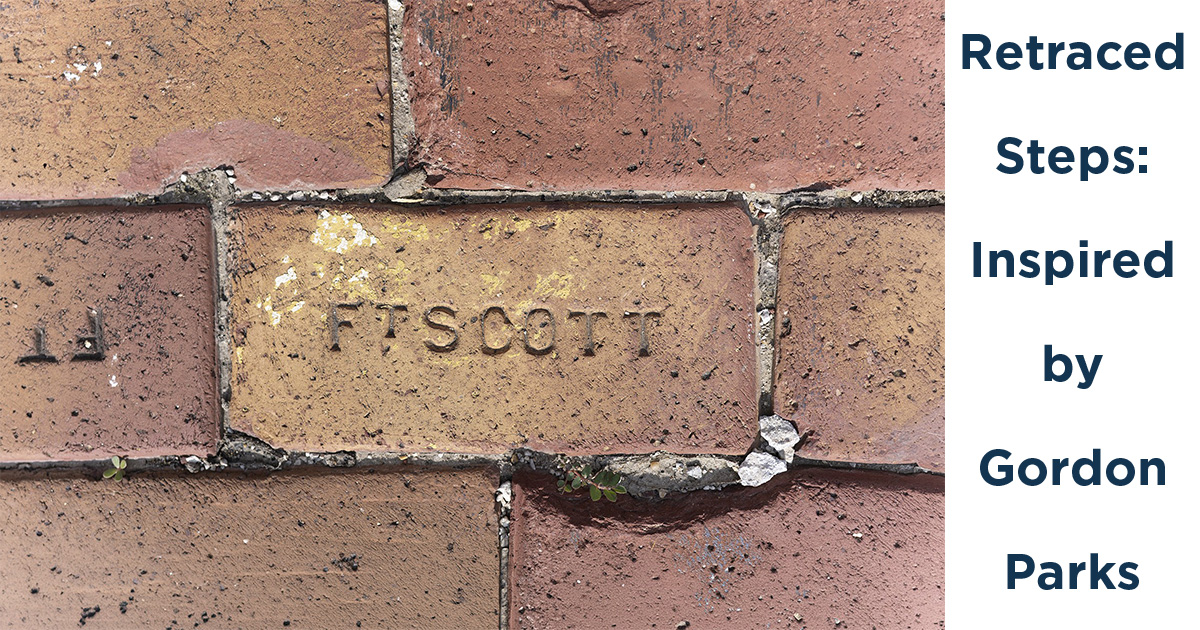
Metro State University and the Gordon Parks Gallery are proud to present a new body of work by noted Twin Cities-based photographer Steve Ozone. Known for portraits that engage questions of social justice, Ozone turns his attention in this exhibition to places across the United States, drawing inspiration from the visual narratives of internationally renowned photographer Gordon Parks.
Rather than recreate Parks’s photographs, Ozone takes up the spirit of his work: the belief that a photograph can invite viewers to look closely at the social conditions shaping American life. Ozone traveled throughout the country to make these new images, considering how a social justice perspective can inform both what a photographer sees and how a story is told.
The exhibition reflects the Gordon Parks Gallery’s commitment to support contemporary artists as they create new work and engage with Parks’s enduring legacy.
Exhibition Information: The show will continue through November 12. Gallery hours are 1 to 7 p.m., Monday through Thursday and Saturday 11 a.m.–5 p.m. The gallery is located on the first floor of Metro State’s Library and Learning Center, 645 East Seventh Street, at the university’s Saint Paul campus.
Artist Bio: Steve Ozone is a photographer and filmmaker with a studio practice in Minneapolis, Minnesota. He graduated from Ball State University in Indiana, with a BA in Photojournalism. A former commercial photographer, he exhibits both locally and nationally. His work addresses issues of immigration, food, and culture. Along with partner Bill Kubota, he is co-producer and co-director of the documentary film The Registry, about Japanese American men recruited by the U.S. Army from internment camps to be interrogators and interpreters in the Pacific. The Registry is available for download or rental on Amazon Prime. His latest photographs can be seen on the outside of the Minneapolis/St. Paul Airport Silver Ramp featuring immigrants of Minnesota from Kenya, Syria, Mexico, Japan, Poland, and Croatia.
Artist’s Statement: As a photographer, filmmaker, musician, poet, and artist, Gordon Parks was an influence on thousands of people, including me. His photography was wide ranging from documenting the rural south to photographing fashion models for Life and Vogue magazines. His Life Magazine work brought non-black people into a world they would have never seen otherwise. Much of his work focused on social justice.
My father was Japanese American, my mother is Chinese American. My family history is a story of injustice, discrimination, prejudice, and lies. The work exhibited here gives the viewer an insight into who I am and where I came from.
My father was nineteen years-old when Japan attacked Pearl Harbor. Two months later President Roosevelt signed Executive Order 9066 forcing all persons of Japanese ancestry to be sent to ten incarceration camps located in remote areas of the western United States. His and his family were sent to Manzanar in California.
My mother’s father was a “Paper Son”. Paper Sons were young male or female Chinese who purchased (forged) papers proving they were born in the United States and were returning after living in China.
My family’s history shaped my interest in immigration, culture and social justice. Along with discovering and comprehending the darker side my family’s American Dream, I’m curious about what it must have been like for my ancestors to come to America—the actual daily experience of living here when laws, policies, and practices essentially said/say “you’re not welcome”. Frankly, I’m not sure if I could navigate the obstacles imposed on current immigrants in achieving naturalization status in the U.S.
I’ve pursued my quest to understand immigrant, incomer, and othered experiences by
photographing people from countries around the world and learning their stories. For this exhibit, and out of respect and admiration for the gallery’s namesake- and my artistic muse—I chose to make photographs in the cities Parks photographed in, and the cities I believe he would have photographed in were he alive today. In so doing, I’ve expanded my world, gained deep appreciation for the fortitude of immigrants, incomers, and othered people, and expect this project to be ongoing.