
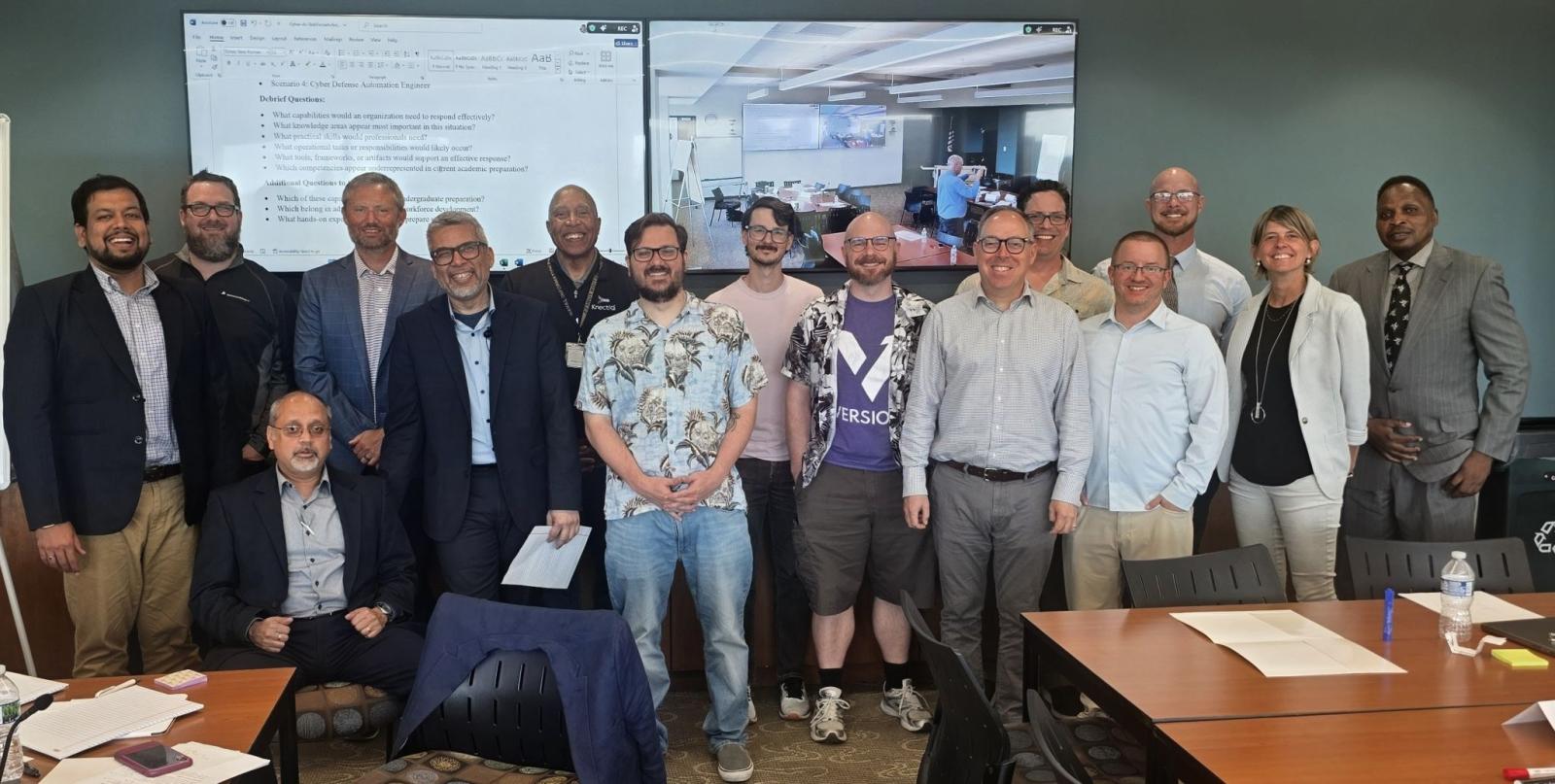
Metro State University recently hosted a Cyber AI Focus Group, bringing together industry leaders, cybersecurity practitioners, government professionals, and academic experts to discuss the rapidly evolving intersection of artificial intelligence (AI) and cybersecurity.
The event, held on June 12, was part of a national initiative led by the National Curriculum Task Force, coordinated through Towson University and funded by the National Security Agency's National Centers of Academic Excellence in Cybersecurity (NSA/NCAE-C) program. The initiative seeks to identify the knowledge, skills, and competencies required for emerging AI-enabled cybersecurity roles and inform future workforce development and educational programs.
As organizations increasingly adopt AI and machine learning technologies to strengthen their security posture, new challenges have emerged around securing AI systems themselves. Participants engaged in discussions focused on AI security, AI governance, workforce readiness, and the practical application of AI and machine learning in cybersecurity operations.
Several critical trends emerged during the focus group discussions, including the growing risks associated with unmanaged or "Shadow AI" deployments, the need for explainable and trustworthy AI systems, the increasing threat of supply chain attacks targeting AI ecosystems, and the rise of AI-driven misinformation and influence campaigns. Participants also explored challenges related to securing AI and machine learning models against threats such as data poisoning, adversarial manipulation, and model misclassification.
A key takeaway from the event was that the future cybersecurity workforce will require more than technical expertise alone. Industry experts emphasized the importance of critical thinking, systems thinking, ethical decision-making, and understanding the limitations of AI systems. Participants also highlighted the growing importance of practical skills in areas such as prompt engineering, AI governance, risk management, and securing agentic and orchestration-based AI environments.
"The cybersecurity profession is undergoing a significant transformation as AI becomes embedded into both defensive and offensive technologies," said Dr. Faisal Kaleem, professor and director of Cyber Programs at Metro State. "Our responsibility as educators is to work closely with industry partners to ensure that our students are equipped with the technical, analytical, and ethical skills needed to navigate this rapidly changing landscape. Events like this provide invaluable insight into the competencies that employers will be seeking in the years ahead."
Throughout the session, participants evaluated emerging workforce roles and identified critical competencies needed for positions involving AI security, cyber defense, AI governance, digital forensics, and AI risk management. The insights gathered will contribute to the development of future curriculum recommendations designed to better prepare students and professionals for careers at the intersection of AI and cybersecurity.
Metro State University remains committed to fostering collaboration between academia, industry, and government partners to address emerging cybersecurity challenges and prepare the next generation of technology leaders.
By convening experts from across sectors, the Cyber AI Focus Group demonstrated the critical role higher education institutions play in advancing workforce development and helping organizations securely adopt transformative technologies.