
College of Business and Management assessment
The College of Business and Management is committed to assessing the learning of our students.
The two categories of assessment that occur are:
- Assessment of the College Common Undergraduate Student Learning Outcomes, and
- Assessment of Program Level Student Learning Outcomes.
The College’s common undergraduate learning outcomes are expected to achieve: (1) knowledge of the common body field of business; (2) critical thinking and problem solving skills; (3) teamwork and collaboration; (4) communication skills; and (5) ethical and social responsibility.
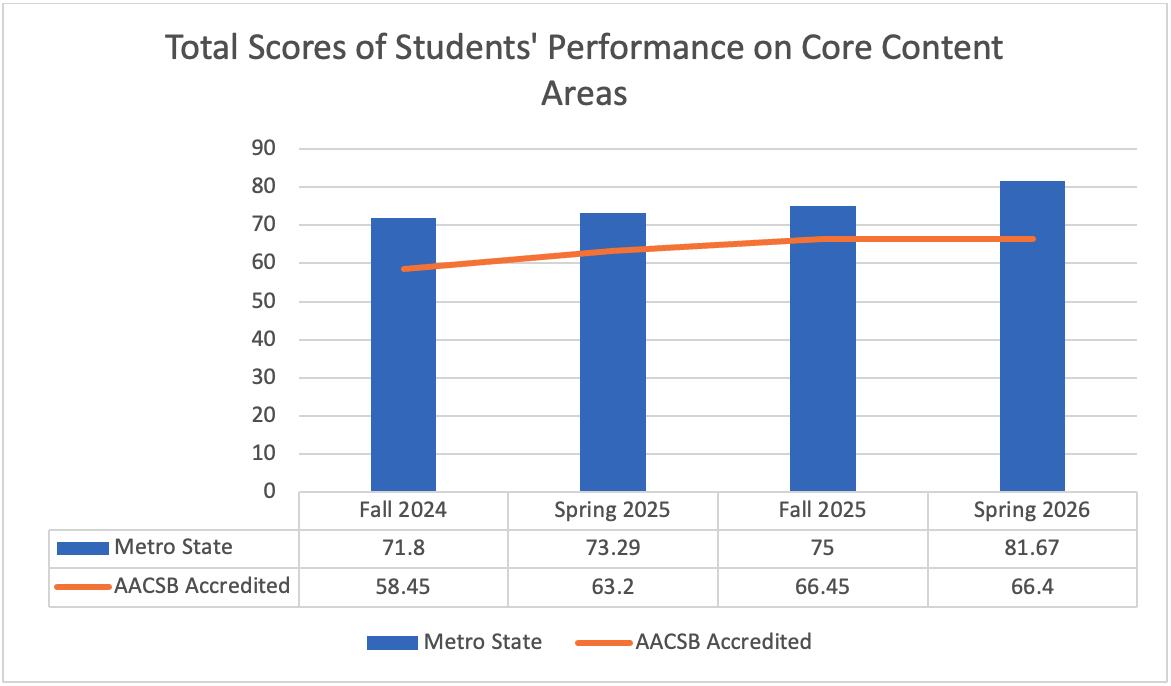
College Common Learning Outcome: Knowledge of the common body field of business
Our students have consistently outperformed peer institutions:
College Common Learning Outcome: Critical Thinking and Problem-solving Skills
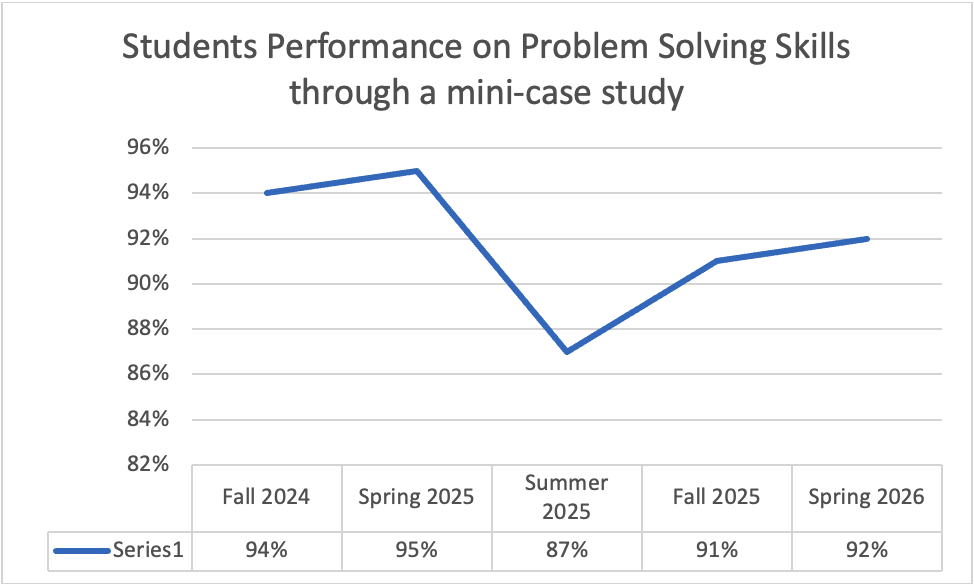
With respect to critical thinking and problem-solving skills, our students have consistently performed above the established benchmark of having at least 80% of students meet or exceed expectations. Assessment results collected over multiple years demonstrate that the College of Business and Management has successfully achieved this target. The data presented below are drawn from the capstone course, MGMT 499, which serves as a key source of evidence for evaluating student achievement of these learning outcomes:
College Common Learning Outcome: Ethical and Social Responsibility:
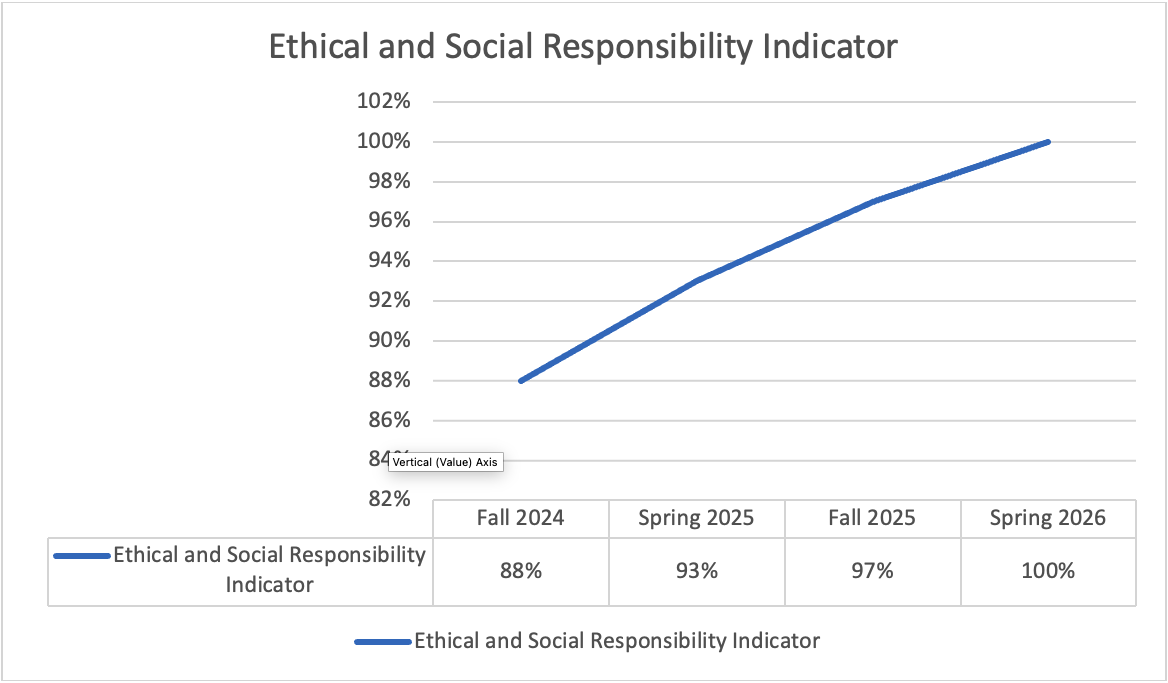
For ethical and social responsibility, we collected data from our required course—MGMT366—to assess students’ ability to articulate an understanding of racism and demographics, laws, values, and business considerations that are driving the trends in workplace diversity.
Program Level Student Learning Outcomes:
At the program level, all of our programs have systematically assessed the programs’ learning outcomes annually and made adjustments to their programs as needed. As part of our university assessment of student learning efforts, academic programs also submit their academic annual reports to our University Assessment Committee and Academic Quality Improvement and Process Innovation Council for feedback and improvement. Programs also need to complete a comprehensive program review every five years. The review includes a significant portion dedicated to analyzing student learning outcomes to continuously improve programs.